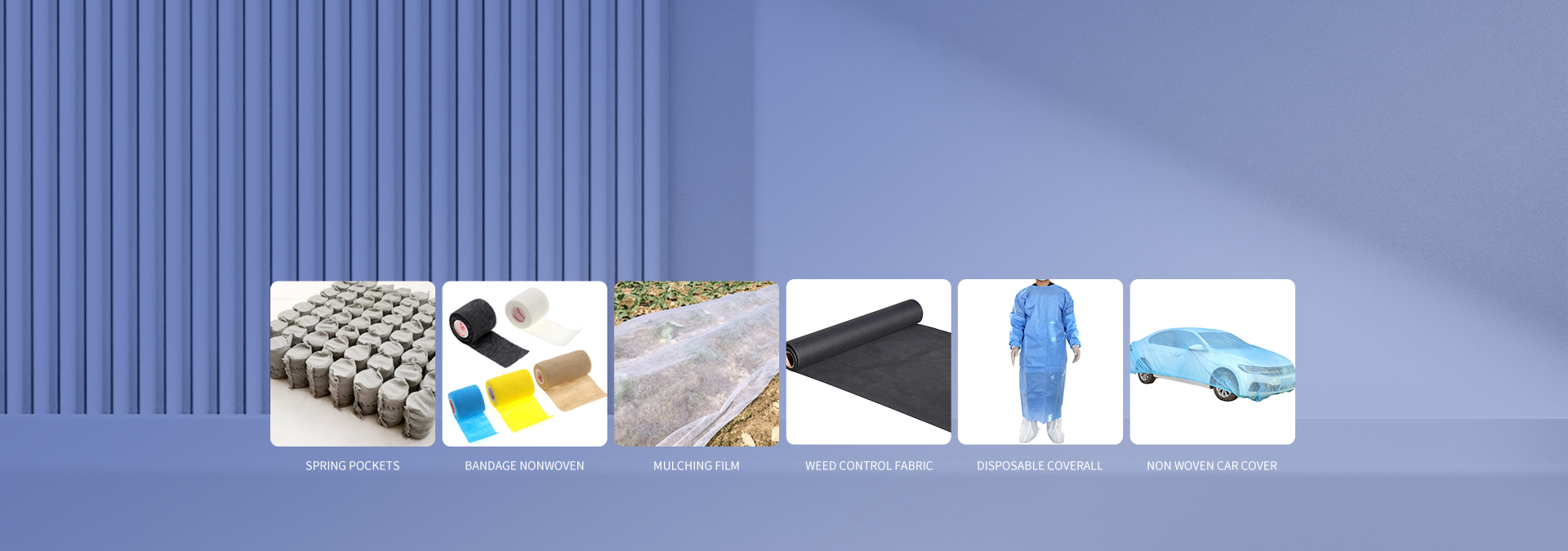
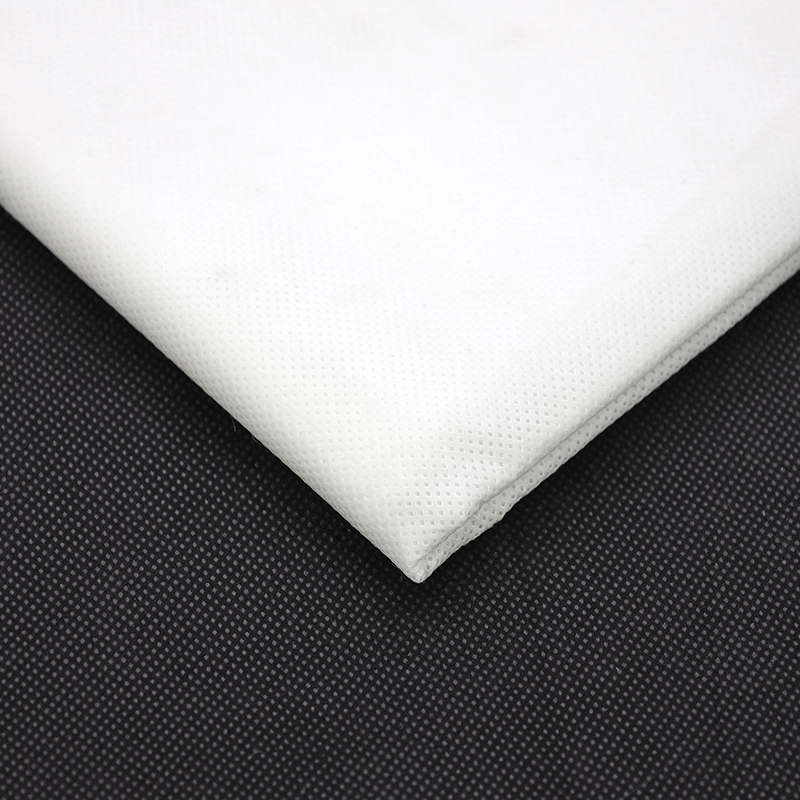
Non-woven fabric, also known as nonwoven, is a fiber product that does not require traditional spinning and weaving processes. Instead, it is formed by directly consolidating fibers into a fabric-like structure through physical, chemical, or mechanical methods, breaking the limitations of conventional warp-and-weft interlacing. Often hailed as the "third generation of textiles" after woven and knitted fabrics, this "non-woven" material has quietly permeated nearly every aspect of modern life—from medical masks to agricultural mulch films, from household wet wipes to geotechnical construction materials.
I. Manufacturing Process: The Smart Revolution from Fiber to Fabric
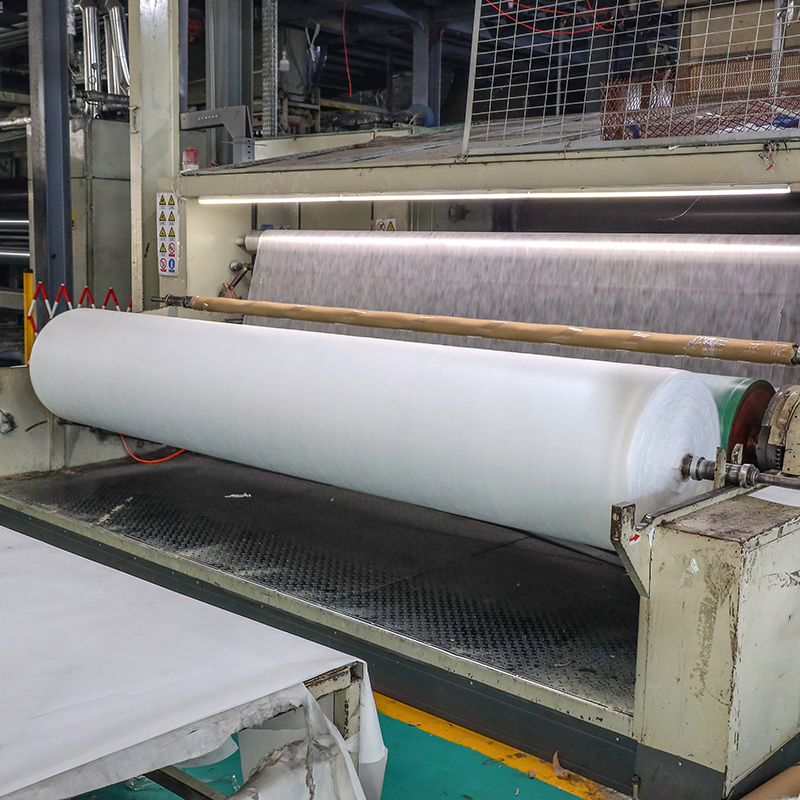
The production of non-woven fabrics bypasses the complex steps of traditional textile manufacturing, centering on two key stages: fiber web formation and web consolidation.
There are three primary web-forming methods:
Dry-laid webbing: Short fibers are uniformly arranged via a carding machine.
Wet-laid webbing: Inspired by papermaking, fibers suspended in water are dehydrated to form a sheet.
Polymer extrusion webbing: Fibers are directly extruded and spun, such as in Spunbond (continuous filament) and Meltblown (ultrafine fibers) techniques, where fiber diameters can reach 1–5 micrometers, creating high-efficiency filtration layers.
Consolidation techniques determine the final performance:
Needle-punching: Thousands of needles repeatedly pierce the fiber web, entangling fibers to produce thick, durable products like geotextiles and carpet backings.
Hydroentanglement (Water-jet): High-pressure water jets force fibers to intertwine, yielding soft, skin-friendly materials ideal for wet wipes and medical dressings.
Thermal bonding: Low-melting-point fibers are heated to melt and bond upon cooling, commonly used in tea bags and shopping bags.
II. Material Classification: A Diverse Spectrum of Fibers
The raw materials for non-woven fabrics are remarkably diverse, defining their functional roles:
Polypropylene (PP): Accounting for over 60% of production, PP is lightweight, waterproof, and cost-effective—dominating shopping bags, packaging, and serving as the core filter layer in surgical masks.
Polyester (PET): High strength and wear resistance make PET ideal for geotextiles, automotive interiors, and agricultural covers.
Viscose-based non-wovens: Excellent moisture absorption, breathability, and softness make them perfect for wipes, sanitary pads, and medical dressings.
Natural fiber non-wovens: Made from cotton, linen, or wood pulp, these are biodegradable and environmentally friendly, used in premium cleaning cloths and tea bags.
III. Unique Properties: Advantages Beyond Traditional Textiles
The distinctive structure of non-woven fabrics endows them with irreplaceable benefits:
High production efficiency: The process is short—raw material to finished product in minutes—making it tens of times faster than traditional weaving, reducing costs by 30–50%.
Customizable functionality: By adjusting fiber fineness, density, and consolidation method, properties like breathability, filtration precision, and tensile strength can be precisely engineered. For example, Meltblown non-wovens achieve filtration efficiencies up to 99.97%, forming the critical barrier in medical masks.
Eco-friendly and lightweight: No need for sizing or desizing, saving water and energy. Lightweight and disposable, they prevent cross-contamination—crucial in healthcare settings.
Structural versatility: Can range from ultra-thin filtration membranes to thick sound-absorbing panels (up to 10 mm); from soft cotton-like textures to rigid board-like structures—adaptable to diverse applications.
IV. Application Areas: A Versatile Material Bridging Sectors
Healthcare & Hygiene: Surgical gowns, protective suits, masks, medical dressings, and wipes—all rely on non-wovens as the first line of defense. During the pandemic, global demand for Meltblown fabric surged, highlighting its strategic importance.
Geotechnical & Construction: Polyester filament geotextiles (with tensile strength ≥20 kN/m) reinforce road and railway subgrades, distributing loads and preventing settlement. Waterproofing membrane substrates provide dimensional stability and puncture resistance.
Modern Agriculture: Agricultural non-wovens offer light transmission and breathability while being biodegradable—solving the "white pollution" problem of plastic mulch films. Insulation blankets made from needle-punched non-wovens improve thermal retention by up to 20%.
Household & Daily Use: Wet wipes, cleaning rags, disposable tablecloths, shoe covers, storage bins—non-wovens integrate seamlessly into daily life at high cost-performance ratios. Wall coverings using hydroentangled non-woven bases offer breathability, moisture resistance, and easy installation.
Industrial Packaging: Anti-static bags for electronics, dust-proof garment covers, and eco-friendly shopping bags combine protection with sustainability.
V. Future Trends: Green Development and High Performance in Parallel
Facing growing environmental pressures, biodegradable non-wovens have become a research hotspot. Materials like polylactic acid (PLA) and polyhydroxyalkanoates (PHA)—derived from renewable resources—can fully degrade within 3–6 months under composting conditions, gradually replacing conventional PP non-wovens.
Meanwhile, advanced functional composites are emerging:
Nano-silver antimicrobial non-wovens for medical dressings;
Electret electrostatically charged non-wovens enhancing filtration efficiency;
Phase-change material (PCM)-integrated non-wovens for intelligent temperature regulation.
These innovations are expanding the application frontier of non-woven fabrics into high-end markets.
Conclusion
Though "not woven," non-woven fabric achieves extraordinary innovation through smart engineering. By freely combining fibers, it builds a bridge between industry and everyday life. From pandemic response to green architecture, from modern agriculture to consumer goods, this "universal fabric" continues to write a new chapter in materials science—driven by adaptability, cost-effectiveness, and relentless innovation.